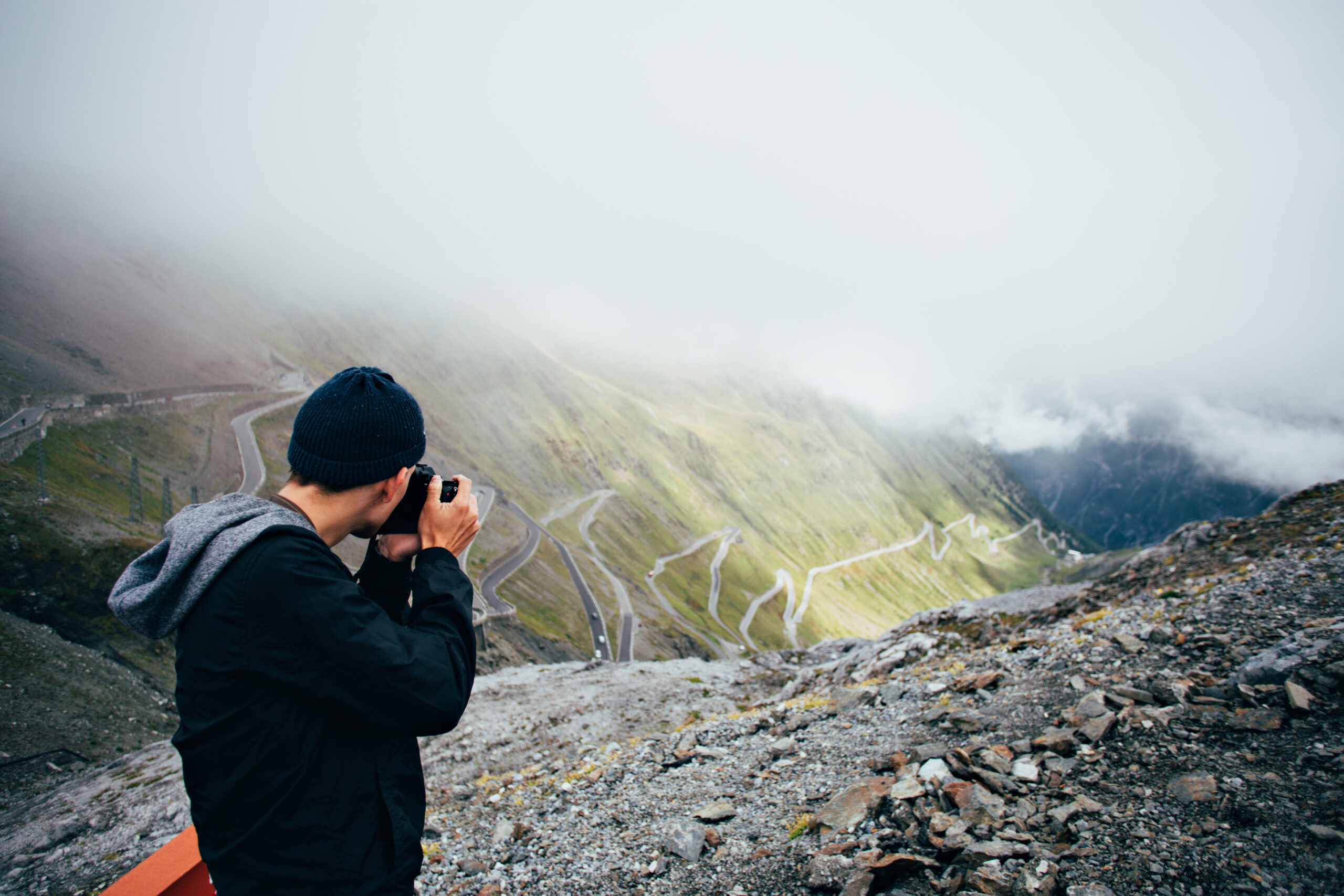
The Journeyman Photographer: More Than Gear, It’s a Journey
What Exactly is a “Journeyman Camera”?
If you’ve heard the term “journeyman camera” and immediately started searching for it on a retailer’s website, you’re not alone. It sounds like it could be a specific brand or a model known for rugged reliability. I certainly spent a good hour online trying to find one before I realized the truth: there is no “Journeyman” camera brand.
The term “journeyman” doesn’t refer to a piece of equipment you can buy. Instead, it describes a stage of growth, a philosophy, and a relationship between a photographer and their tool. It comes from the medieval guild system, where a craftsman progressed from Apprentice (learning the basics), to Journeyman (skilled, traveling to hone their craft), and finally to Master (creating their own masterpieces and teaching others).
In photography, your “journeyman camera” is the faithful, versatile, and often unglamorous tool that accompanies you through this middle phase.
The Heart of the Matter: Adopting the Journeyman Mentality
So, if it’s not a product, what are we really talking about? We’re talking about a mindset. The journeyman mentality is the most important shift any photographer can make. It’s the move from being obsessed with gear to being obsessed with seeing.
I remember my own transition vividly. I had a beginner DSLR and was constantly looking at reviews for the next upgrade, convinced my images weren’t sharp enough because I didn’t have this lens or that sensor. Then, I met a seasoned photojournalist at a workshop. His camera was years old, scuffed, and taped together in one corner. Yet, the images he showed us were breathtaking—full of emotion, story, and perfect timing. He said, “This old thing? It’s just my hammer. I’m too busy building to worry about the brand stamped on the handle.” That was my first lesson in the journeyman philosophy: the tool serves the vision, not the other way around.
This mentality focuses on:
-
Mastery Over Mystery: Learning every function, menu, and quirk of the camera you own.
-
Adaptability: Using your skill to overcome your gear’s limitations, whether that’s low light, fast action, or challenging weather.
-
Consistency: Developing a reliable process and style that shines through regardless of the subject.
-
Creative Problem-Solving: Seeing limitations not as barriers, but as creative challenges.
Finding Your Own Journeyman Camera: A Practical Guide
While “Journeyman” isn’t a brand, the concept perfectly describes a category of camera. It’s that mid-tier workhorse that offers advanced controls without overwhelming complexity, and solid build quality without a pro-level price tag.
Here’s what to look for when identifying a camera that can serve as your loyal companion on this creative journey:
Core Characteristics of a Reliable Workhorse
-
Manual Controls: Full control over aperture, shutter speed, and ISO is non-negotiable. This is how you move from taking pictures to making photographs.
-
Interchangeable Lenses: The ability to change lenses is a gateway to different perspectives and styles, from vast landscapes to intimate portraits.
-
Robust Build: It should feel solid and be able to withstand the bumps and weather of real-world use. Many mid-tier models now feature weather-sealing.
-
Excellent Image Quality: Look for a sensor that performs well in a variety of lighting conditions, delivering sharp, clean images you can be proud of.
-
Intuitive Interface: The controls should make sense. You shouldn’t have to dive into a manual to change a basic setting; it should become second nature.
Modern Digital vs. Classic Film: Two Paths
Your journeyman tool can be digital or film, each offering a unique path to mastery.
Modern Digital Journeyman (Like a Mid-Tier DSLR or Mirrorless):
These are the obvious choice for most. They offer immediate feedback, which is incredible for learning. You can shoot hundreds of frames, review your exposure and composition on the spot, and adjust. Cameras like the Fujifilm X-T series, the Sony a6000 series, or mid-range Nikons and Canons often fit this role perfectly. They balance performance, cost, and durability.
Classic Film Journeyman (Like the Ricoh KR-10X):
My personal love affair with the journeyman phase was cemented by a film camera. As described in a wonderful online review, the Ricoh KR-10X is a quintessential example. It’s a 1980s SLR that was “aimed at the budget end of the market, but was quite well-specified”. I found one at a flea market for less than the price of a fancy dinner.
-
It’s fully manual but has a great light meter.
-
It uses the ubiquitous Pentax K-mount, so lenses are plentiful and affordable.
-
It’s built like a tank—all metal and glass.
-
Most importantly, it forces you to learn. With only 36 exposures per roll, you slow down. You consider every frame. You learn to visualize the exposure before you click the shutter. The reviewer noted that despite its modest reputation, the camera “performs consistently well” and the results can be stunning. Shooting film in this digital age is a profound exercise in discipline and intentionality that every photographer can benefit from.
The Essential Toolkit: Skills to Hone on Your Journey
Owning the right tool is just the start. A journeyman is defined by their skills. Here are the core competencies to develop, which are far more valuable than any piece of gear.
1. Mastering the Exposure Triangle
This is your foundation. Understand how aperture (depth of field), shutter speed (motion), and ISO (light sensitivity) interact. Practice until you can look at a scene and instinctively know a good starting point for settings.
2. The Unbreakable Rule of Composition
Learn the “rules”—rule of thirds, leading lines, framing, negative space—and then practice breaking them with purpose. Composition is about guiding the viewer’s eye and telling a story within a rectangle.
3. Seeing and Shaping Light
Light is photography’s paintbrush. Learn to observe its quality (hard vs. soft), direction, and color. Practice shooting the same subject at dawn, noon, and dusk. Learn how to modify light with a simple reflector or diffuser.
4. Developing a Consistent Workflow
A journeyman is organized. From how you pack your bag to how you name, store, and edit your files, a reliable workflow saves time, prevents lost images, and lets you focus on creativity.
5. Finding and Telling Stories
Move beyond snapshots. Ask yourself: What is the emotion here? What is the relationship? What is the moment before or after the one I’m capturing? Your goal is to make the viewer feel something.
The Journeyman in Action: Real-World Applications
This mindset isn’t theoretical. It transforms how you approach every photographic genre.
-
Street Photography: Your journeyman camera is likely compact and discreet. You’ve set it to aperture-priority and zone-focused, so you can react instantly to fleeting moments without fumbling. The camera disappears, and you become a observer.
-
Portrait Photography: Whether in a studio or on location, you’re not just using light, you’re crafting it. You know how your lens renders faces at different focal lengths. You’re directing your subject with confidence because you’re not preoccupied with your camera’s settings.
-
Landscape & Travel: Your gear is trusted and weather-resistant. You have a sturdy tripod and know how to use filters. You’ve researched the location and are patient enough to wait for the right light. The journey—hiking to a remote vista—is as important as the final image.
-
Personal Projects: This is the journeyman’s playground. A personal, self-driven project—like documenting your neighborhood, a 365-day challenge, or a photo essay on a local issue—is where you synthesize all your skills and discover your unique voice.
Beyond the Camera Body: The Supporting Cast
Your camera is the heart of your kit, but a journeyman knows the value of the right support system.
-
Lenses: Invest in glass. A versatile standard zoom (like a 24-70mm equivalent) and a fast prime lens (like a 35mm or 50mm) will cover 90% of your needs and teach you more about perspective than any camera body.
-
The Bag: Your Mobile Basecamp: A good bag is crucial. It’s not just about carrying gear; it’s about organizing and protecting your tools for easy access. As highlighted in a review of the Oliday Journeyman bag, the ideal pack is durable, comfortable, and intelligently organized, allowing you to separate gear while remaining stylish and functional. The reviewer praised its comfort, adequate padding, and smart design, awarding it an Editor’s Choice after a year of heavy use.
-
Tripod: A solid tripod is non-negotiable for sharp images in low light, long exposures, and intentional composition. It literally forces you to slow down and think.
-
Editing Software: Post-processing is the digital darkroom. Learning software like Adobe Lightroom is part of the modern journeyman’s skill set. It’s where you put the final polish on your vision.
Common Pitfalls: Mistakes Every Aspiring Journeyman Should Avoid
I’ve made these mistakes, and you probably will too. The key is to learn from them quickly.
-
G.A.S. (Gear Acquisition Syndrome): The belief that your next purchase will make you a better photographer. It won’t. Master what you have first.
-
Chasing Perfection Over Progress: Waiting for the perfect camera, the perfect lens, the perfect light, the perfect subject. Start now, with what you have, where you are.
-
Comparing Your Beginning to Someone Else’s Middle: Social media is a highlight reel. Don’t compare your chapter 2 to someone else’s chapter 20. Your journey is your own.
-
Neglecting the Fundamentals: You can’t build a strong house on a weak foundation. Revisit the basics of exposure and composition regularly.
-
Shooting Only for Likes: Create work that is meaningful to you. Authenticity resonates far more deeply than pandering to an algorithm.
From Journeyman to Master: When Does the Journey Evolve?
The journeyman phase isn’t something you “complete.” It’s a way of being. However, you’ll know you’re transitioning when:
-
Your technical decisions become completely subconscious, freeing your mind to focus solely on content and emotion.
-
You develop a recognizable, consistent style that shines through regardless of the assignment.
-
You start to break the “rules” intentionally and effectively to serve your creative vision.
-
You feel compelled to share what you’ve learned, mentoring newer photographers.
Becoming a “Master” in the guild sense isn’t about fame or fortune. It’s about achieving a level of unconscious competence where you can consistently create work that is uniquely yours, and then having the generosity to guide others on their path.
Conclusion: Your Camera is Your Partner, Not Your Passport
The search for the “Journeyman Camera” is, in the end, a beautiful misunderstanding. The real search is internal. It’s the quest for patience, curiosity, resilience, and vision. Your perfect journeyman tool—be it a decade-old DSLR, a vintage film SLR, or a capable mirrorless camera—is out there. But it only becomes a true journeyman camera when it’s covered in your fingerprints, configured to your instincts, and scarred from the adventures you’ve shared.
Stop looking for the camera that will make you a photographer. Pick up the one you have. Learn it. Use it. Scratch it. Fill its memory cards with experiments and failures and, occasionally, magic. That process—the practice, the persistence, the miles walked and the moments seen—is what transforms you from an owner of equipment into a photographer. And that camera, whatever its make or model, will have earned its title: your faithful Journeyman.
Frequently Asked Questions (FAQ)
Q1: I found a “Journeyman” Wi-Fi security camera online. Is that related?
No, that’s a coincidence of branding. The term “journeyman” in the context of this article refers to a photographic philosophy and stage of development, not a specific security camera product you might find from an unbranded seller on an auction site.
Q2: What’s the first skill I should master with my journeyman camera?
Master the exposure triangle (aperture, shutter speed, ISO). Shoot in full manual mode for a week. It will be frustrating, but it’s the fastest way to understand how light and your camera work together. This foundational control is a key feature of any capable journeyman tool.
Q3: Is film or digital better for learning as a journeyman?
Both are excellent teachers, but in different ways. Digital offers instant, cost-free feedback, which is incredible for rapid experimentation. Film teaches discipline, intentionality, and a deeper understanding of exposure due to its cost and lack of a preview screen. Many photographers find that spending time with film deepens their skills when they return to digital.
Q4: How do I know when I’ve outgrown my current journeyman camera?
You’ll know it’s time to upgrade when the camera is actively preventing you from executing your vision (e.g., it can’t focus fast enough for the action you shoot, its low-light performance is too poor, it lacks a critical feature you use constantly). Not being able to afford the latest model is not the same as outgrowing your current one.
Q5: Can a smartphone be a journeyman camera?
Absolutely. The principle is about the mindset, not the sensor size. If you learn its limitations (like variable aperture, smaller sensor), master its manual/pro mode, and use it to consciously practice composition and storytelling, then your smartphone can absolutely be the tool for your journeyman phase. The best camera is always the one you have with you.